 |
 |
 |
|
|
|
Gokkun Umaji Mura!by Paul Fioravanti and Zachary Piper
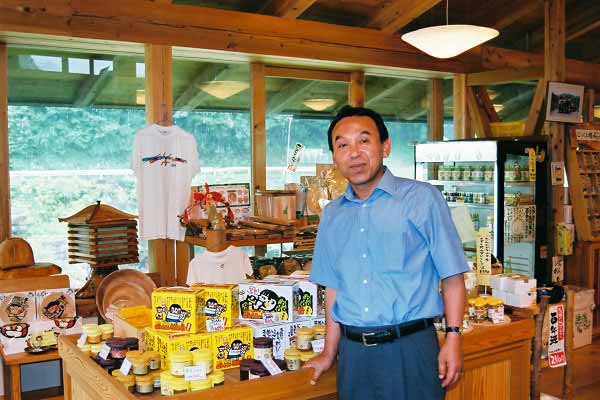
‘Gokkun’: it’s a Kochi institution. Arguably the most famous name associated with the unique fruit known as yuzu. We interviewed Mochifumi Toutani, Representative Managing Director of the Umaji Village Farming Cooperative Society to get the lowdown on yuzu, and its relationship to Umaji. Oi! Kochi (OK): First, can you tell us about your company and what it is you make? Mr. Mochifumi Toutani (MT): It’s not a company; it’s an organization: a co-operative made by farmers. There are 650 members from 340 households. Umaji’s population is a bit more than 1200, and the only produce we have is yuzu. There are a number of rice paddies, but the farmers only grow enough rice to feed their own families. OK: For those who don’t know what yuzu is, can you please explain what it actually is and what it tastes like? MT: Well, if they could drink it… to explain with words is kind of… If the people who don’t know what Yuzu is could smell its fragrance and taste it on their tongues, that would be the best way to show them. I can’t explain it with words really… OK: It’s not a lemon, but is it sour like one? MT: Lemon, lime, with other types of citron; they’re all aromatic citrus fruits. OK: Why do you grow yuzu in Umaji? MT: We’ve had yuzu for a long time now. The actual cultivation of the yuzu started in 1965, over 30 years ago. “Actual cultivation” meaning that we’ve been using the fruit from the natural yuzu trees for a long time now. The trees would bear fruit that would turn yellow in the autumn. The farmers would then pick the fruits, peel them and squeeze them. Then they’d take the juice and use it in their cooking, making yuzu a part of the dietary culture. They’d use it with sushi and other things. Have you ever eaten it?
OK: Yes, I have. I really like it. In what ways do you use yuzu? Do you use it in cooking or in other ways? MT: Yuzu is a very useful citron. It is fragrant and it has a sour taste. It has a lot of seeds which can also be used along with the skin and the juice; you can use the entire fruit. It can be used as foodstuffs, as bath powder, skin lotion; the different ways of using yuzu are incredibly varied. The oil contained in yuzu skin can be used for aromatherapy, so we’ll be making a shipment to Europe to see how they appraise it. OK: Do you ship yuzu products outside of Kochi Prefecture? MT: We ship all over the country. OK: Are your products popular? MT: They aren’t very popular in Tohoku (Northern Honshu). They don’t have citrus fruits in Tohoku so they don’t have the same dietary culture. Though people from all over Japan move to Hokkaido, so there is a desire for yuzu products there. OK: How about in the south? MT: Okinawa has a different kind of citrus. The fragrance is a bit different. They have sour mikans in Tokyo and the areas south of Tokyo, (so our yuzu products are popular there). OK: Do you think there’s an opportunity to sell your products in other countries? MT: We had a product display in America. I went there once. There are Japanese people living there who had trading companies, so we were able to do some business through them. We didn’t sell a lot, however, as shipping costs proved to be expensive. OK: There are other yuzu products apart from Umaji’s on the market, so how did you create a unique image for your products? MT: We don’t just sell products; we’re selling Umaji as well. That’s a bit different. 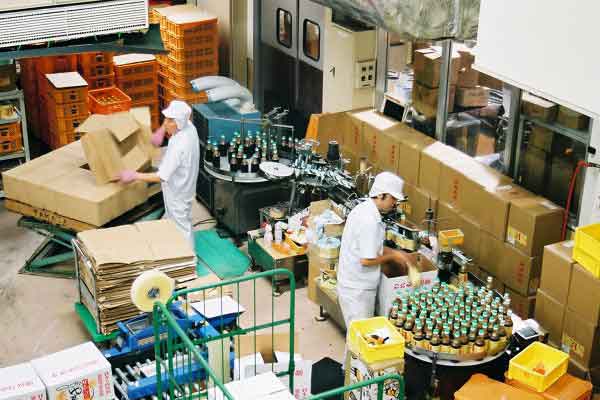
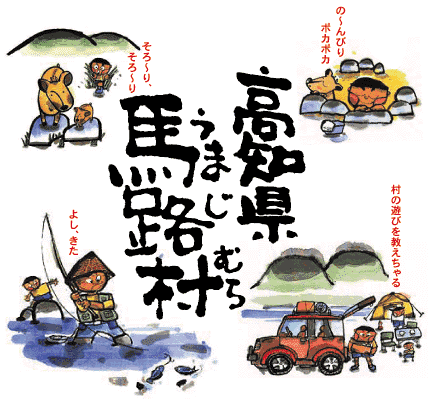
OK: What kind of image do you have of your own product? Do you think it’s unique? MT: Well, we can’t really rate our own product but… For food, if you don’t have faith in your product you can’t recommend it to other people. If you offer it to other people it means you think your food is delicious and safe. Otherwise, no one would buy it. OK: From my perspective, it seems that the marketing of Umaji’s goods relies heavily on the ‘made in a small village/the countryside’ image. Is this important? MT: Very much so. We are selling the countryside as well, so don’t want our image to imitate an urban city. Home-made goods, yuzu made with care by your grandparents, and a place where children play happily are the kinds of important elements that we want to promote. OK: Do you believe that Umaji’s yuzu goods are of a higher quality than yuzu goods made by a companies based out of cities? MT: Of course! From picking the fruit to primary processing to the secondary stage of the finished goods, we do it all ourselves. A big company probably cannot do their own ingredient processing, so because of this, they begin their production from when they buy the fruit. Umaji can do both production and manufacturing which is to our advantage. OK: Would Umaji consider moving the yuzu factory into a city? MT: I don’t think it would be good to do that. It’s not just yuzu that we’re selling; it’s necessary to sell Umaji as a place: its climate, and it’s natural features; as a village in the forest of 1200 people where the villagers themselves make the yuzu and live happily. OK: As you said before, one of your selling points is of the friendly grandmother making the yuzu. Does your workforce consist only of older people or are there young people working for you also? MT: There are about 60 young people working at the factory in sales, processing, and packing. 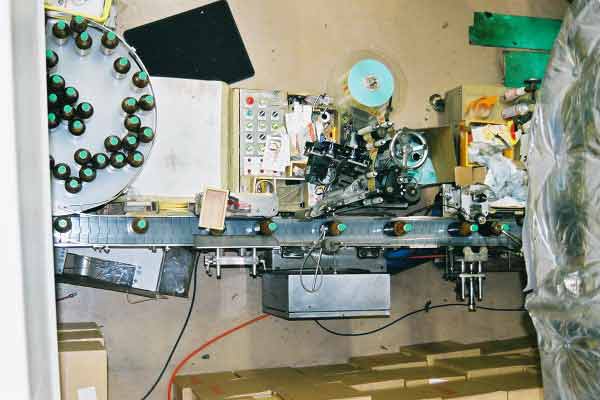
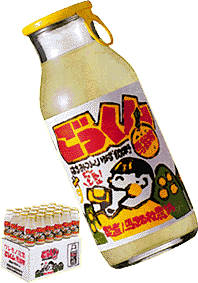
OK: Presently, there has been a lot of talk concerning gappei [the consolidation of towns and villages into larger cities, mostly for economic gain]. If Umaji were to consolidate, the village name would disappear to possibly become Umaji Town. What effect do you think this would have? MT: The Agricultural Cooperative Association will not consolidate. We haven’t thought too much about if the village will consolidate, but even if the present administrative area becomes part of a larger city, I don’t think that our business practices will change. Even if we lose the village name, we’ll still be selling our product. I don’t think that will change, but I can’t say with certainty what will happen. OK: Where did you get the name “Gokkun”? MT: It means the width of the bottle’s opening. When we were thinking of a name we just couldn’t come up with anything. Then, when we decided on the bottle…the width of the opening and the feeling of drinking it… that’s ‘Gokkun’. However ‘Gokkun’ alone doesn’t tell where it’s from, so we added ‘Umaji-mura’ to the end. OK: How long did it take for you to perfect Gokkun? MT: We had to work on the taste, the bottle, the label…it took about a year to create the image we wanted and how we wanted the final product to turn out. Of course it took quite a bit of time particularly to get the taste we wanted. OK: Does the Gokkun Character have a name? MT: The boy on the bottle’s name is Gokkun Bouya. He’s pretty much the basis of our product. OK: Is the person who created him from Umaji? MT: No, he’s from Kagami Village in Kochi prefecture, but he does rent out a house in Umaji. He uses Gokkun Bou for his work in design and illustration.
OK: Is the character used anywhere outside of Umaji? MT: The character has a strong association with Umaji and its image, so if someone used it, our brand and image would suffer. OK: However, the character is within Umaji for other things apart from Gokkun, such as the Umaji Heart Attack Marathon, right? MT: It’s also used for Umaji tourism and onsen pamphlets. Though, if it’s not presented as a unified image, and used carelessly on unrelated material, its meaning becomes lost. OK: I have to admit that I like to mix Gokkun and shochu to make a ‘Gokkun-wari’, so I was wondering whether you had plans to sell your own mixture of yuzu and shochu. MT: We’re in the foodstuffs business only, and currently have no plans to undertake alcohol production on a large scale. We do sell some alcoholic products through mail order, but we don’t think there are that many customers who would want them from us. OK: Have you thought about any new products? MT: Yes. We’re thinking of making yuzu lotion, soap, shampoo products; items for everyday use. OK: Do you have a final message for Oi! Kochi readers? MT: To those who have not tasted or drunk Umaji, and to those that have, please come and visit us!
|
 |