 |
 |
 |
|
|
|
Unsung Heroes of Tosa: The Nasu FarmerArticle/Photos: Jennie Kern, Translation: Paul Fioravanti
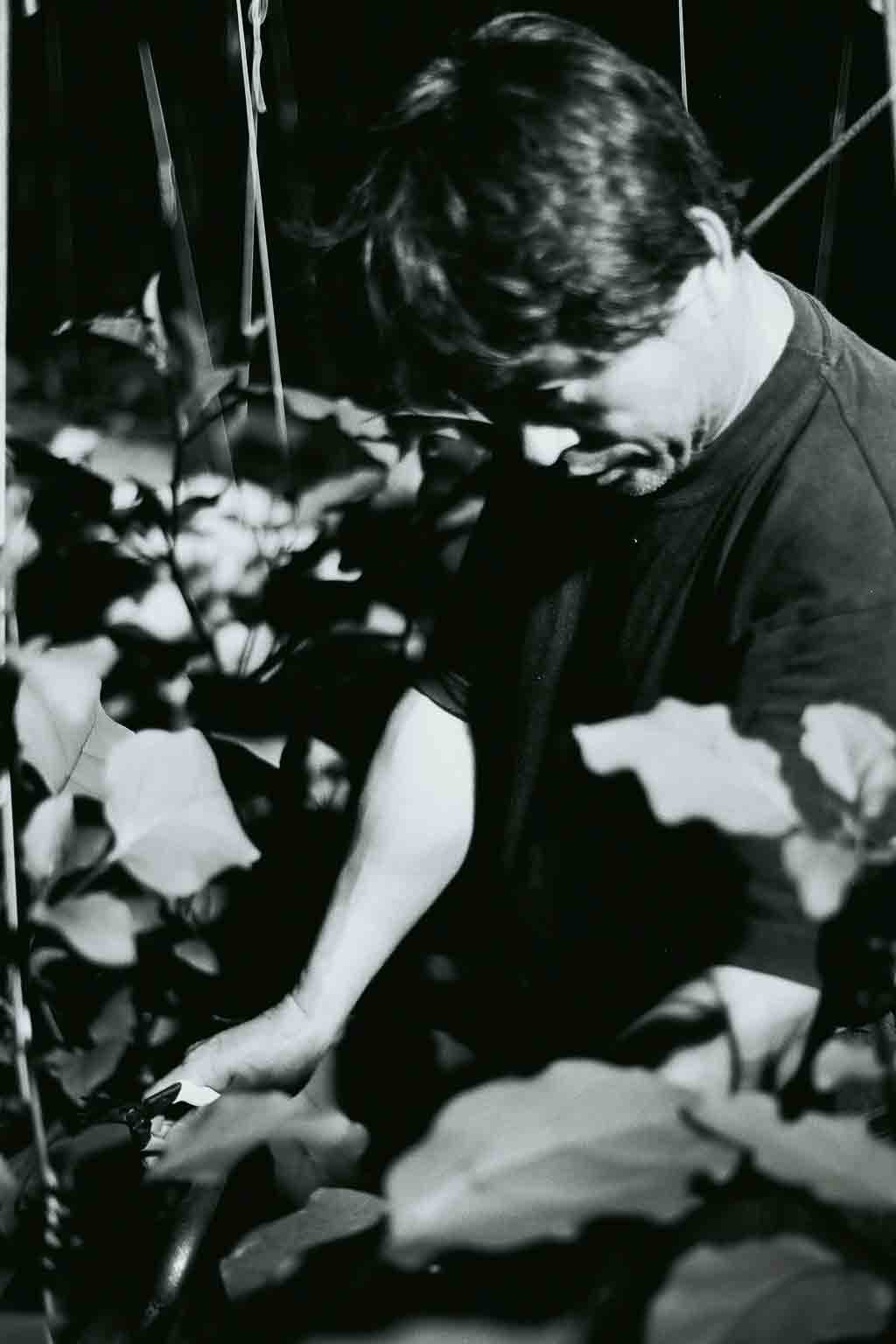
It was quite a predicament I was in. There I was on the bus one evening, heading east from Aki City to the nearby town of Yasuda. There was a kindly old woman sitting across from me, a bag of groceries by her side. There were my students, surrounding me, chatting to each other as they rode off to their respective homes. And there was my wallet, lying unassumingly on my dining table back home. Having peered into my bag and reached the conclusion derived from the above facts, I froze. Heart racing, mind reeling from the potential humiliation, I tried to find a solution. Asking one of my students for cash being far too compromising, I made a few phone calls and finally got a hold of my kenpo master. Five minutes later, there I was at my stop. And there he was, cigarette casually dangling from his mouth and a fist full of cash in his outstretched hand. In that moment he single-handedly saved me from almost certain embarrassment. Before I could obsequiously thank him for the tenth time, he was off, driving back along the country roads to resume the work he had begun prior: harvesting eggplants in his greenhouses. If there ever was a Kochi Everyman, a likely candidate would be the eggplant (aubergine) or nasu farmer. His quiet heroism seen in his daily toil amongst his crops. The planting and the harvest—all evocative of the epic struggle that is human life. Well, perhaps not. But the nasu farmer is indeed an important figure in Kochi—if not in its mythos then at least in its economy and cuisine. In 1998, Japan’s total GDP was 498,016,898 billion yen, with farming contributing 9,868,000 billion. Kochi’s share of the farming total was 122,500 billion yen, and of that nasu farming had contributed 25.8 percent. It is no surprise then that in the landscapes of greenhouses and fields, nasu remains a prominent fixture in Kochi agriculture. Everywhere you go you can taste it: pickled in school lunches, fried at office enkais, topping pastas in Italian restaurants, even appearing as a quirky ice cream flavor in specialty shops. Armed with cash in hand, I head off to Yasuda again to spend some time with my kenpo master, Mr. Noriyoshi Nishiyama, so that he might teach me a thing or two about the joys of nasu. Arriving at his house shortly before dusk, I am greeted by Mr. Nishiyama and his wife. He has a total of three greenhouses, all filled with neatly spaced rows of nasu plants. While farming is big business for people in Kochi, it is done on a comparatively small scale. He tells me that on average farmers tend to have 23 greenhouses, something I find surprising given the vastness of farming enterprise in many western countries. It’s busy work nonetheless, as nasu is grown year-round, and work is done everyday. Asked about his daily schedule, he replies, “I get up around six and begin work. Sometimes we’ll continue working until ten at night. From March until June it’s the peak season, so I’m busiest then.”
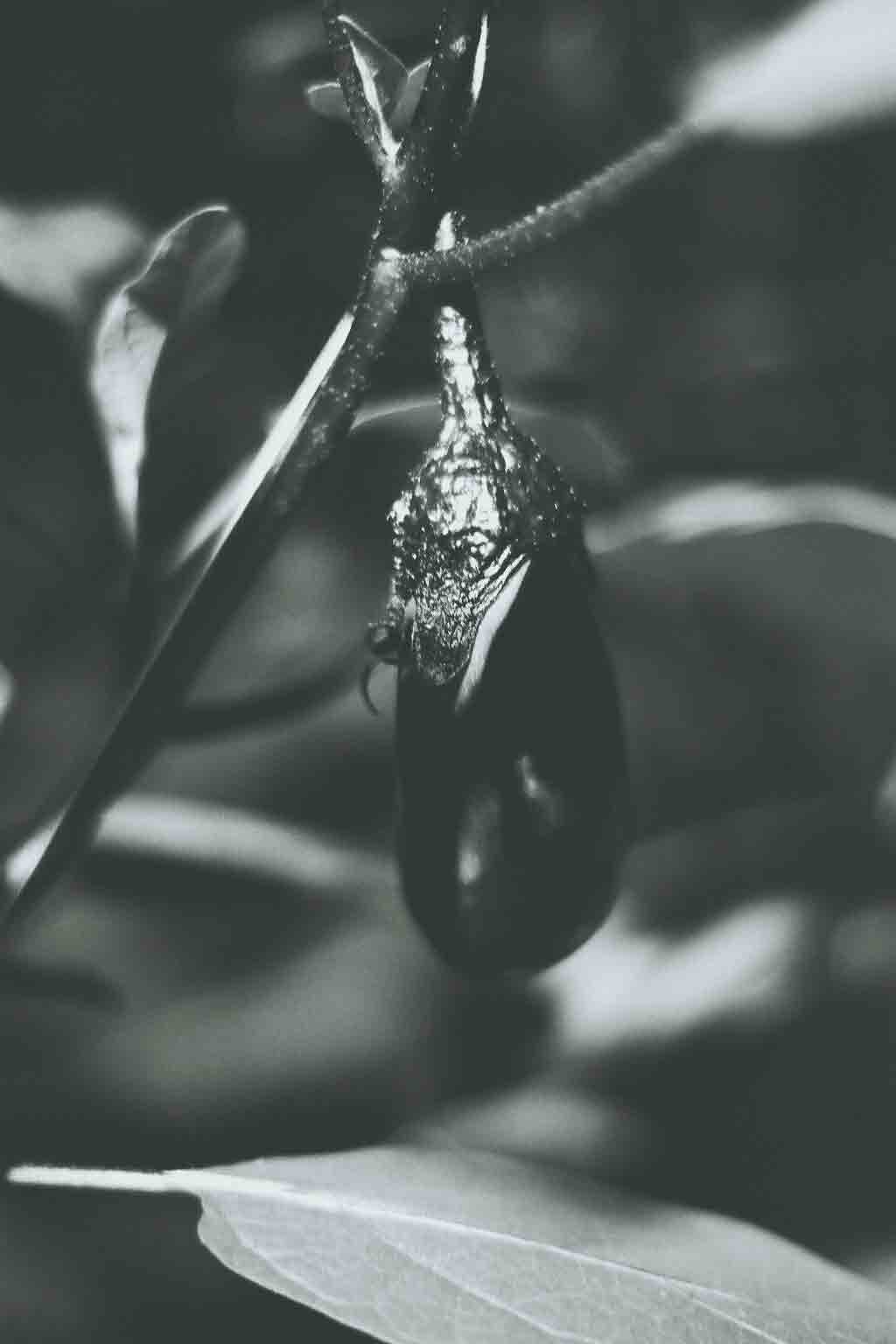
In the daily grind there are different tasks involved in nasu farming. Plants are seldom grown from seed but are purchased rather as seedlings. After about a month these plants have grown considerably and are ready to bear fruit. From there the process begins of caring for the plants, picking the ripe fruit, and removing flowers from around budding nasu to promote growth through the saturation of sunlight. Each plant lasts about nine months and the cycle begins again. Nasu farmers also get a little help from the insect world when it comes to growing their produce. To aid in the pollination process, bees are purchased to roam free among the plants. “I use about 24,000 bees in my greenhouses each year,” he tells me.
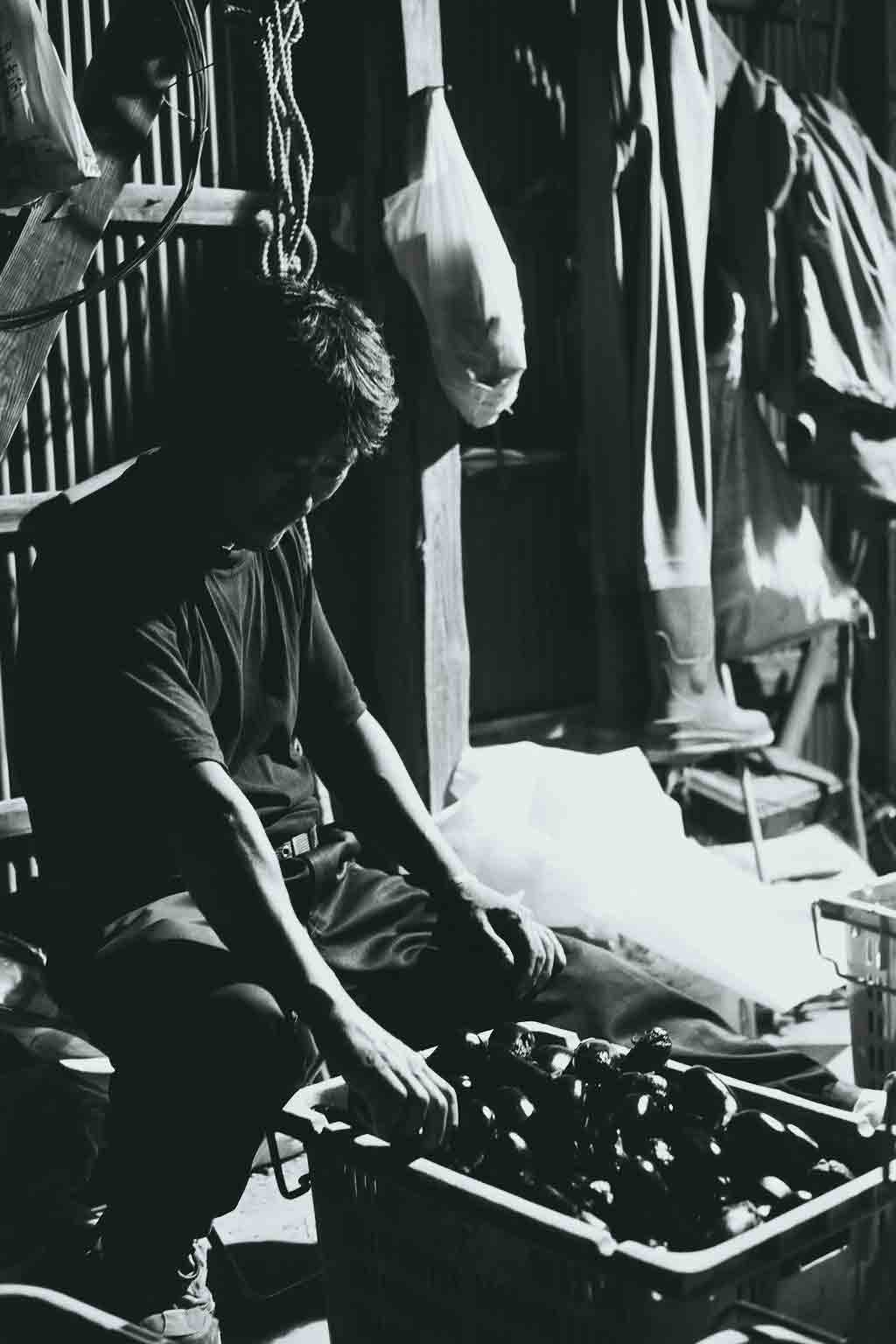
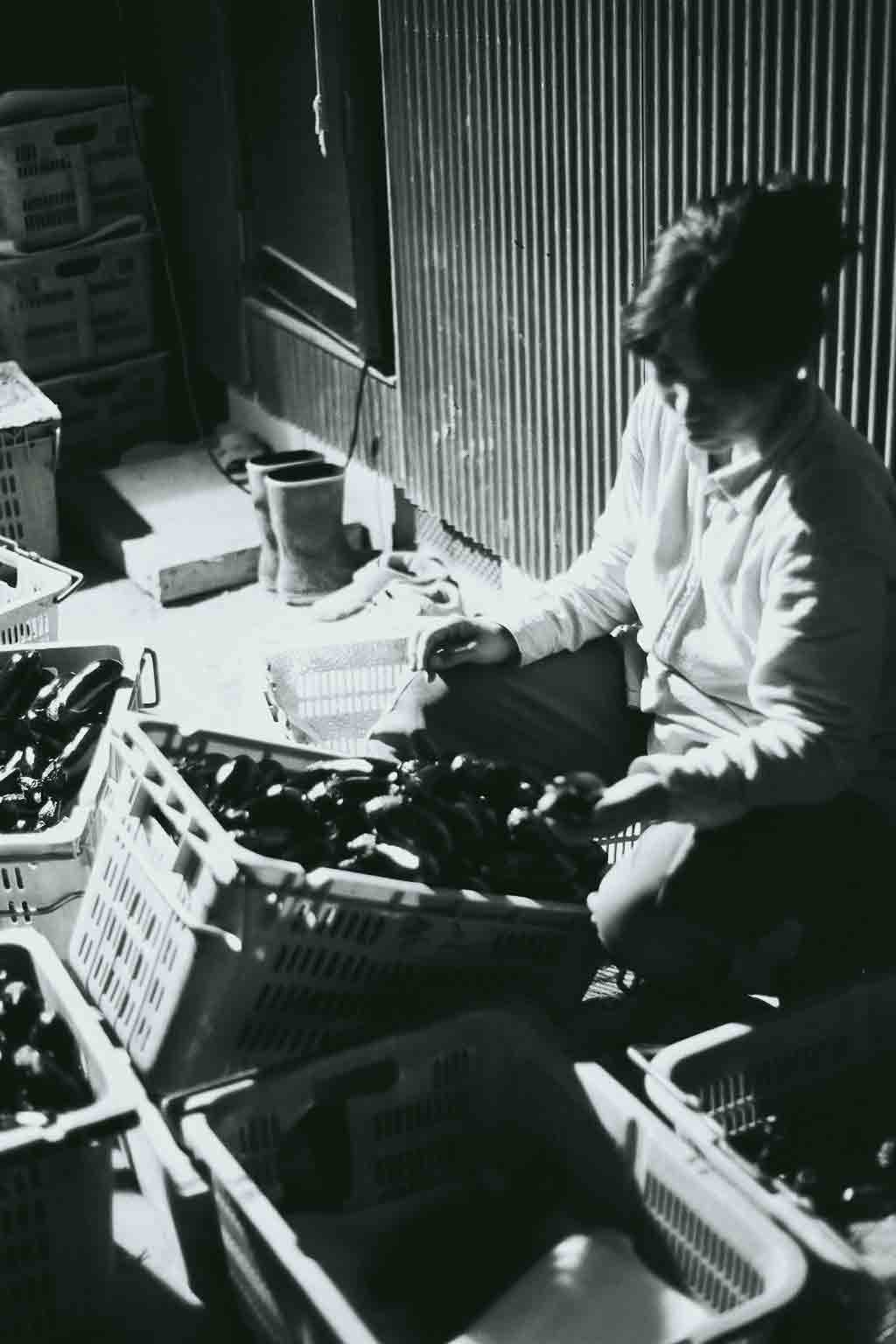
Nonetheless, nasu farming continues to thrive largely as a family-oriented operation. In fact, farming seems to be one of the more gender balanced jobs around, as both men and women find equal opportunity in its practice. Of the 68,762 people that engaged in Kochi’s farming industry in 2000, 36,068 were men and 32,694 were women. It is not uncommon for husband and wife to work side by side, with grandparents often lending a helping hand or two. He leaves me with some words of nasu wisdom, as he tells me the “three k’s” of farming: kitsui, kitanai, and kiken. In short, it is difficult, dirty and dangerous. The latter attributed to the use of tractors and other heavy farming machinery. And maybe bees. As I prepare to leave, Mr. Nishiyama and his wife have settled onto overturned crates in their garage, where they sit facing each other as they separate the nasu according to quality. I gather my things and survey the scene around me—the outline of the greenhouses in the darkening night sky, the ubiquitous white farmer’s truck parked on the driveway, the quiet sorting of nasu by husband and wife. It may not be the stuff of epic heroes like the Ryomas of years past, but there is a respectful certitude in this way of living that also plays a part in Kochi’s lore. |
 |